GO
OUTSIDE.
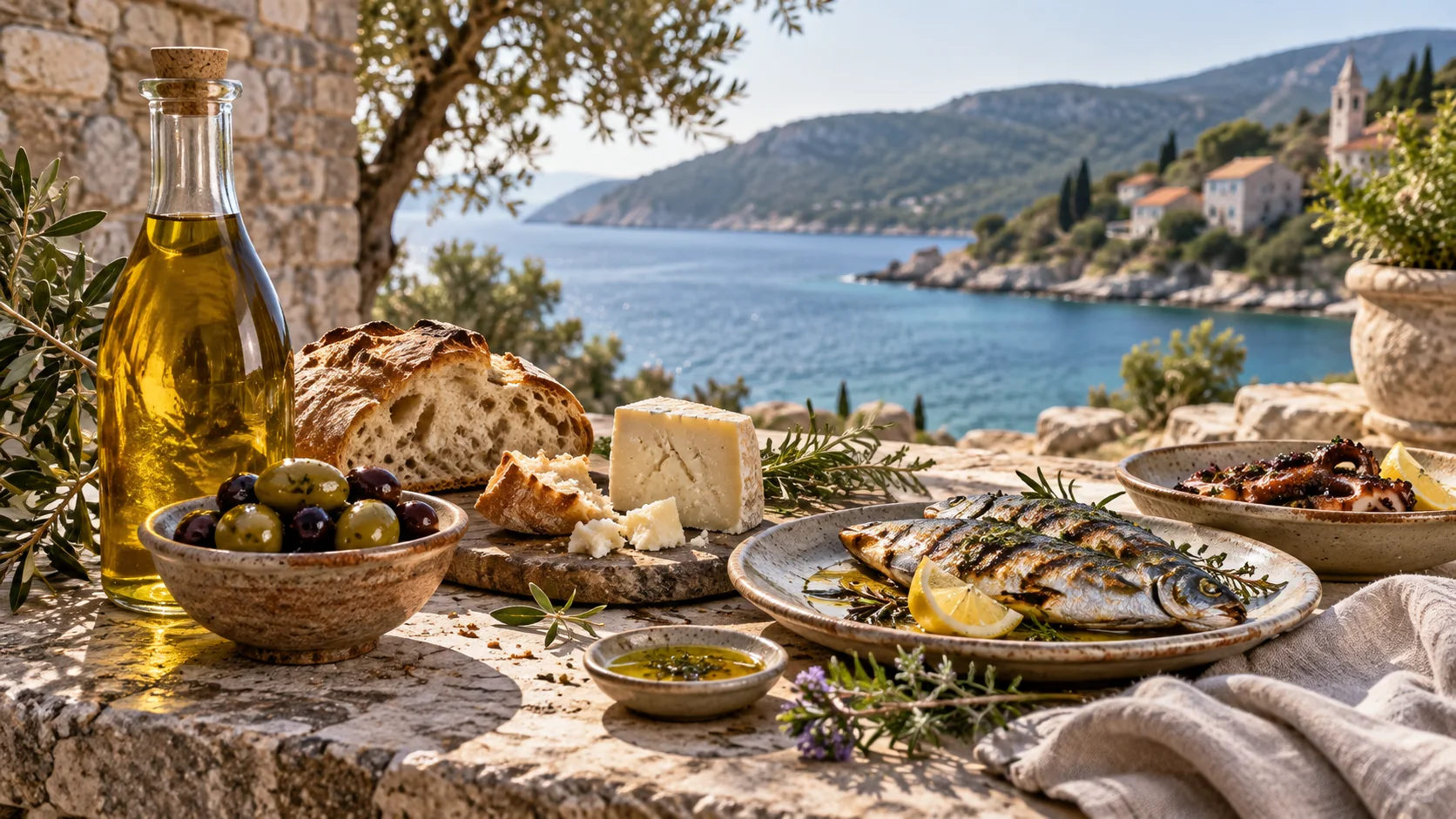
Cres is at its best when the landscape is part of the activity — walking into a cove, looking for a vulture on a thermal, or eating what the island produces.
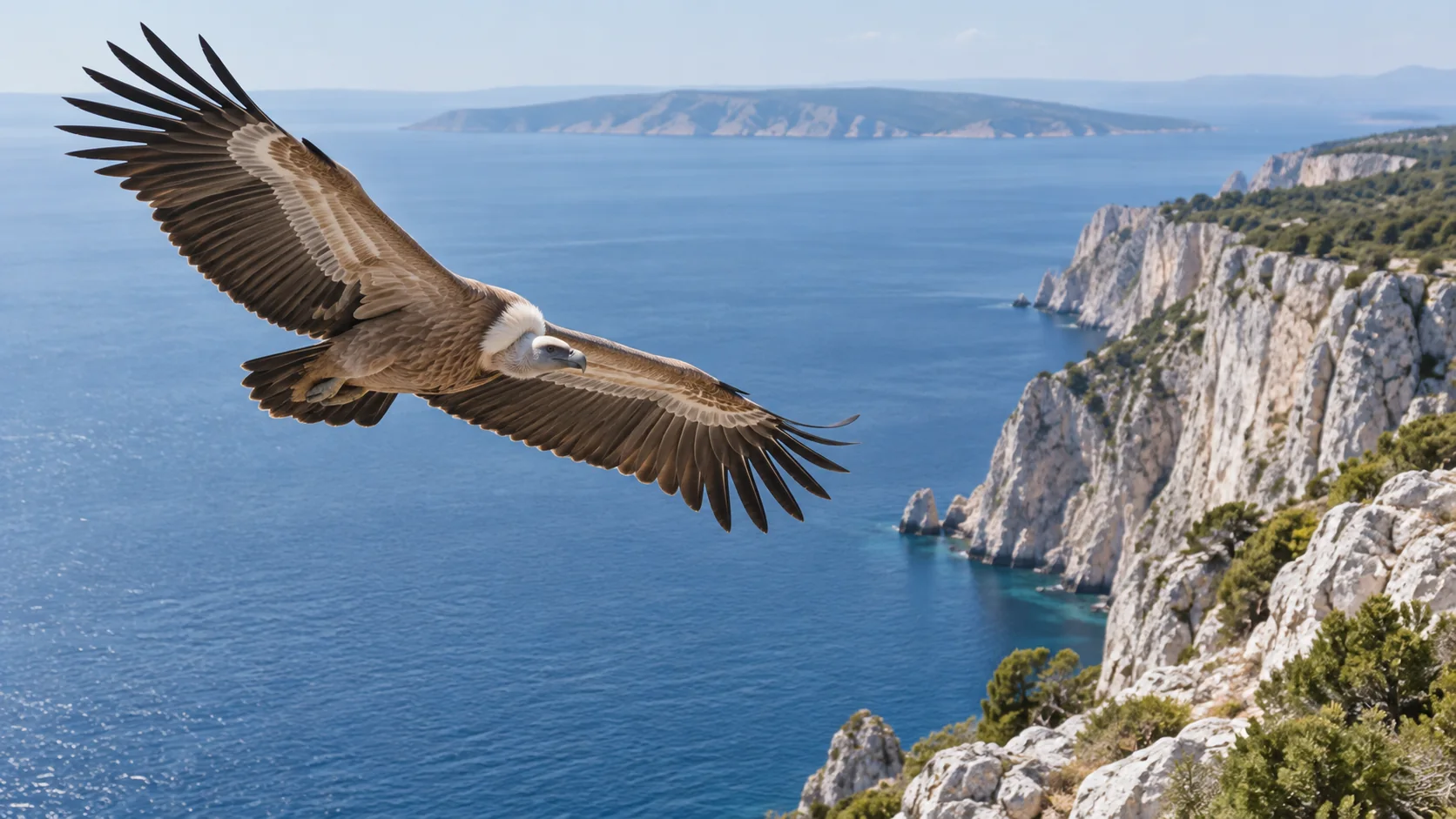
The vulture island.
The official Cres guide identifies the island as one of the remaining habitats of the griffon vulture and says its Cres population nests on cliffs directly above the sea. Beli is the essential place to understand that story responsibly.
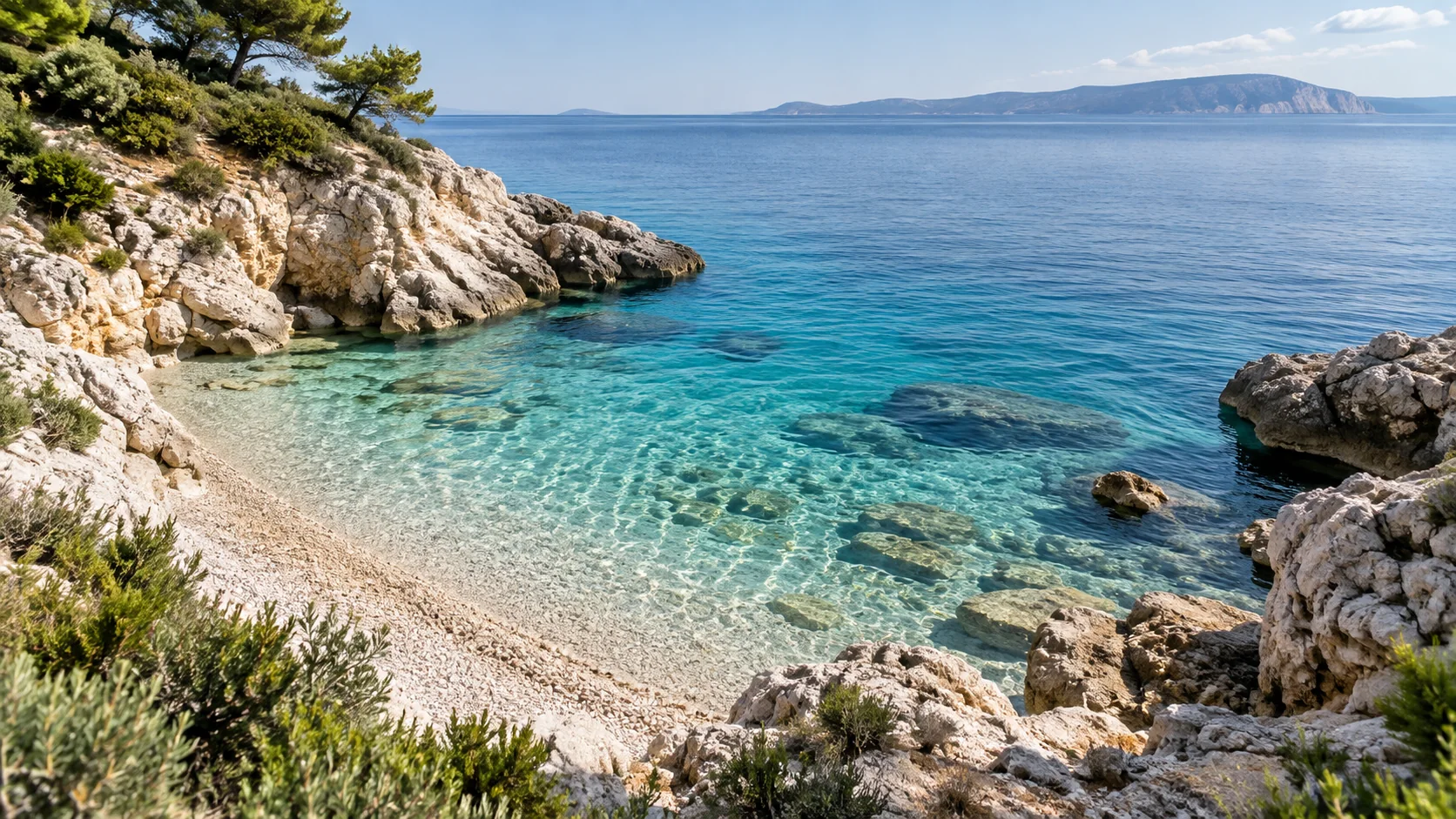
Some beaches make you earn the swim.
Visit Cres highlights Sv. Blaž, Mali Bok, Plave grote and Lubenice beach among the island’s most attractive beaches, and notes that many remote coves are reached by narrow steep paths or from the sea.
About 300 km of marked trails.
The official destination site lists roughly 300 kilometres of marked hiking trails connecting the island’s interior, settlements and coast. It also references more than 1,400 plant species.
Walk
Use old paths to connect places rather than treating walking as a separate attraction.
Cycle
Spring and autumn are specifically recommended by Visit Cres for cycling in milder temperatures.
Paddle
Kayak and SUP turn the coastline into the route, not merely the view.
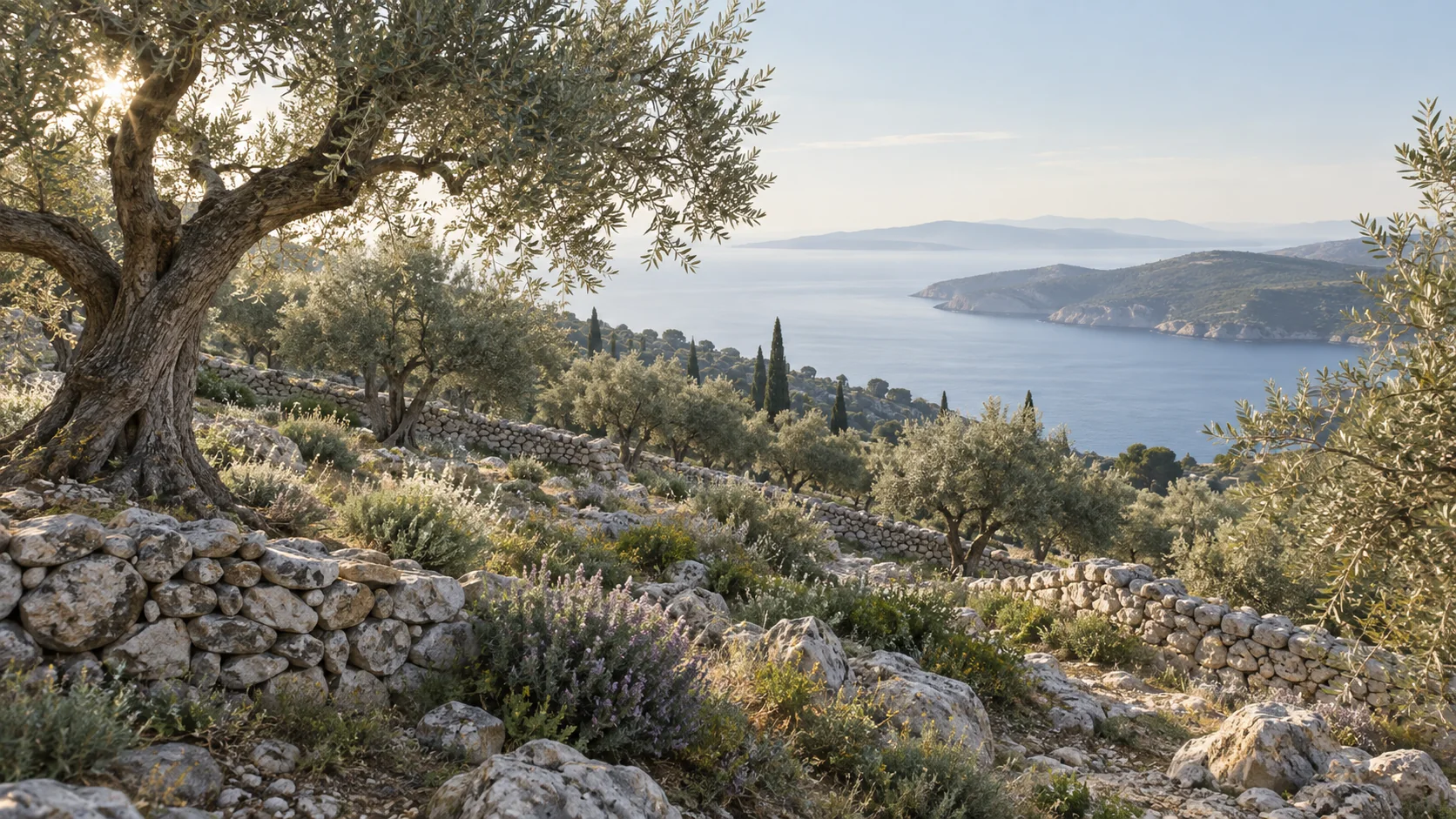
The island grows its own mood.
Olive groves, dry-stone walls and herbs above the sea are not background decoration. They are part of the lived texture of Cres — and part of why the island feels slower, older and more grounded than many Mediterranean destinations.
Olive. Lamb. Fish.
Cres cuisine is strongest when it remains close to the island: olive oil from local groves, Cres lamb, fish, sheep cheese and simple Mediterranean cooking. The premium experience is provenance, not complication.